Clean Downloads
Sort installers, receipts, exports, PDFs, photos, screenshots, and temporary files into folders you can scan later.
Feature overview
A fuller look at the controls behind the download page: review-first cleanup, local model options, safer recursive scans, undo, and privacy-focused workflows.
Tired of digging through cluttered folders with meaningless file names? Let AI File Sorter help you clean Downloads, rename photos and scanned documents, organize screenshots, and review old archive folders before anything changes.
Choose a focused cleanup flow, inspect the proposed categories and filenames, then apply only the rows you trust. Dry run, file previews, undo, and project-folder protection keep everyday cleanup reversible and easier to verify.
Use it with local folders, synced cloud folders, external drives, and mounted NAS shares. Local processing can stay fully offline, or you can bring your own OpenAI, Gemini, or compatible endpoint when you want cloud model power.
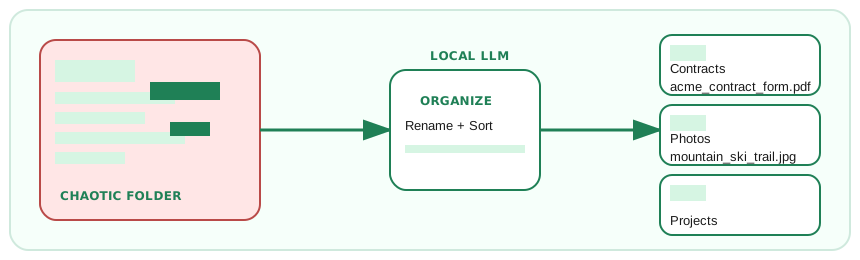
Sort installers, receipts, exports, PDFs, photos, screenshots, and temporary files into folders you can scan later.
Use image and document content to suggest clearer names for camera exports, scans, PDFs, Office files, and text documents.
Group screenshots and UI captures by visible content, project, or reference type.
Point AI File Sorter at mounted network shares or external backups and review the plan before moving files.
Use focused starting points for jobs like Clean Downloads, Rename photos and scans, Organize screenshots, or Sort archives. The app shows a review plan first, so you can approve only the changes you trust.
The app can use local visual models to understand images, handle screenshots and UI captures more intelligently, and suggest useful categories or filenames without uploading pictures.
Create focused category lists where each main folder can have its own allowed subfolders, so a Documents cleanup and an Images cleanup do not have to share the same subcategory rules.
Preview files while checking suggested categories and names, making it easier to approve the right changes without jumping back and forth between windows.
When scanning subfolders, AI File Sorter avoids reorganizing recognized Unity, Unreal, Godot, Blender, Git, and common source-code project folders where moving files could break a project.
Instead of relying only on filenames, AI File Sorter can read supported documents to make better sorting and naming suggestions.
Approved category decisions can be reused as local hints in future runs, and Settings includes tools to clear caches or reset learned behavior when you want a clean slate.
Use rename-only mode when you want clearer filenames without moving files, with review labels that show exactly what changed.
For media files, available metadata can help create more meaningful filenames before you approve the changes.
Limit a run to pictures or documents when you want faster, more targeted cleanup for a specific file type.
When image dates are available, categories can include date context so photo folders are easier to scan later.
The app checks your machine and suggests model choices that fit your available hardware instead of leaving you to guess.
Point the app at your own compatible endpoint when you run models locally or through a private gateway.
Long sorting jobs save progress during processing, reducing the risk of losing work if something interrupts the run.
Review the proposed source and destination paths first, then decide whether to apply the moves.
Undo information is saved to disk, so you can revert the last applied sort even after closing the app.
Use cloud models only with your own keys, giving you control over provider, model choice, and account usage.
Use folders already available to your operating system, including Dropbox, Google Drive, OneDrive, iCloud Drive, USB drives, SMB shares, and other mounted NAS locations.
Download supported local models quickly, reuse Gemma 3 4B IT for both text and visual workflows when applicable, add your own local model files, and keep model downloads in the storage location you prefer.
Choose More Refined when you want more specific top-level folders, or More Consistent when you want similar files to stay under steadier broad categories.
Improved labels and progress announcements make the app easier to follow with screen readers and during longer analysis runs.
Use localized interface text and get guided help faster with built-in Quick Start and FAQ entry points across the expanded language set.
Compatible NVIDIA, AMD, Intel, and Apple hardware can speed up local model processing, and recent releases improve backend choice and startup reliability.
Local processing keeps files and model analysis on your computer unless you explicitly choose a remote provider.
The app is available across major desktop platforms, and the source code can be inspected or contributed to on GitHub.